The Little Way of Spiritual Childhood and Merciful Love
How could a young woman who died at the age of twenty-four within the cloistered walls of a Lisieux convent, never having traveled to distant lands, shake the entire world to become the Patroness of Missions and a Doctor of the Church? Saint Thérèse of the Child Jesus and the Holy Face (Thérèse de l'Enfant-Jésus et de la Sainte-Face, 1873–1897), born Marie-Françoise-Thérèse Martin, was a French Discalced Carmelite nun whose theological intuitions transformed twentieth-century Christian spiritual theology. Born in Alençon and raised at the Les Buissonnets villa in Lisieux within the devout home of canonized parents Louis and Zélie Martin, she triumphed over early bereavement to enter Carmel at fifteen. The pinnacle of her legacy is crystallized in her autobiographical masterpiece Story of a Soul (Histoire d'une âme) and her doctrine of the "Little Way of Spiritual Childhood" (Petite Voie)—an evangelical revolution viewing human weakness not as a barrier, but as the reason to be carried by the elevator of divine grace. Tested by terminal pulmonary tuberculosis and a desolate "dark night of faith" at the table of modern unbelievers, she maintained heroic trust until her final breath, promising a shower of roses before being proclaimed the 33rd Doctor of the Universal Church (Doctor Amoris) by Pope Saint John Paul II in 1997.
“Truly, I say to you, unless you turn and become like children, you will never enter the kingdom of heaven. Whoever humbles himself like this child, he is the greatest in the kingdom of heaven.”
I. Humble Beginnings And The Christmas Conversion Of 1886
Born in the historic lacemaking town of Alençon in Normandy, France, on January 2, 1873, Marie-Françoise-Thérèse Martin was the fruit of an exceptionally holy domestic sanctuary. Her father, Louis Martin, was a devout watchmaker and jeweler; her mother, Zélie Guérin, was an acclaimed master of Point d'Alençon lace. Both parents were jointly canonized by Pope Francis in 2015, becoming the first married couple in modern Church history to be raised to the altars together1. However, Thérèse's warm childhood was shattered in August 1877 when her mother succumbed to breast cancer before Thérèse had reached her fifth birthday. This profound bereavement plunged the child into severe emotional hypersensitivity and recurrent nervous tears.
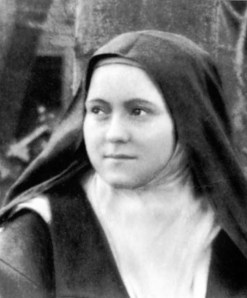
Relocating to the Les Buissonnets villa in Lisieux, Thérèse clung deeply to her eldest sister Pauline as her second mother. When Pauline, followed by Marie, entered the Lisieux Carmel, Thérèse suffered a severe and mysterious psychological illness. On May 13, 1883, while bedridden at Les Buissonnets, the statue of Our Lady of the Smile appeared to smile upon her with celestial maternal sweetness, instantly dissolving her distress and restoring her peace2.
1. The Grace Of Complete Christmas Conversion (1886)
While physically restored, emotional hypersensitivity remained a serious obstacle to her spiritual development. Everything transformed on Christmas night in 1886 following Midnight Mass. Overhearing a passing weary remark from her father regarding the children's shoe tradition, instead of bursting into tears, Thérèse received an instantaneous outpouring of supernatural grace:
This pivotal conversion liberated her from self-absorption and ignited an ardent zeal for souls. Her missionary heart burned with fervor when she prayed intensely for Henri Pranzini, a condemned triple murderer, and witnessed him kissing the crucifix three times moments before his execution.
II. Carmelite Vocation And The "Grace Elevator"
Possessing an unshakeable vocation, Thérèse boldly overcame all canonical obstacles regarding her young age. During a diocesan pilgrimage to Rome in November 1887, defying strict Swiss Guard protocol, the fourteen-year-old girl knelt at the feet of Pope Leo XIII, pleading for permission to enter Carmel. On April 9, 1888, the cloister doors of Lisieux Carmel officially opened to welcome her at the age of fifteen3.
1. The Elevator Intuition And Holy Smallness
Surrounded by nineteenth-century French spirituality still burdened by Jansenistic rigorism (which viewed perfection as an arduous climb reserved for heroic spiritual athletes), Thérèse recognized her absolute helplessness:
"I have always desired to become a saint, but alas! When I compare myself with the saints, I realize between them and me there is the same difference as between a mountain whose summit is lost in the clouds and an obscure grain of sand trampled underfoot." Yet instead of despairing, she turned to the Sacred Scriptures and discovered the revolutionary genius of the Little Way (Petite Voie):
III. Act Of Oblation To Merciful Love And The Dark Night Of Faith
On Trinity Sunday (June 9, 1895), Thérèse initiated a momentous doctrinal shift: rather than offering herself as a victim to Divine Justice (a widespread pious practice to appease divine wrath against sinners), she consecrated herself as a whole burnt offering to God's Merciful Love (Amour Miséricordieux)4. She pleaded that the rejected waves of infinite tenderness might flood her soul, turning her into a martyr of divine love.
1. The Dark Night Of Faith And Solidarity With Modern Unbelievers
Beginning on Good Friday 1896, her first hemoptysis signaled terminal pulmonary tuberculosis. Simultaneously, Thérèse was plunged into a terrifying spiritual trial: all sensory consolation of faith vanished, replaced by an icy inner darkness where nineteenth-century atheist materialism whispered that after bodily death lay nothing but an absolute void.
IV. Textual Archaeology: The Autobiographical Manuscripts
Her autobiographical masterpiece Story of a Soul (Histoire d'une âme) was not composed as a unified commercial monograph, but consists of three distinct manuscripts written under religious obedience:
- Manuscript A (1895): Six school notebooks dedicated to Mother Agnès of Jesus (Pauline), recounting her childhood and early Carmelite years.
- Manuscript B (1896): A theological letter to Sister Marie of the Sacred Heart, containing her magnificent mystical discovery: "In the heart of the Church, my Mother, I will be Love!".
- Manuscript C (1897): Penned on her infirmary sickbed for Mother Marie de Gonzague, analyzing fraternal charity, her mission to priests, and the trial of faith.
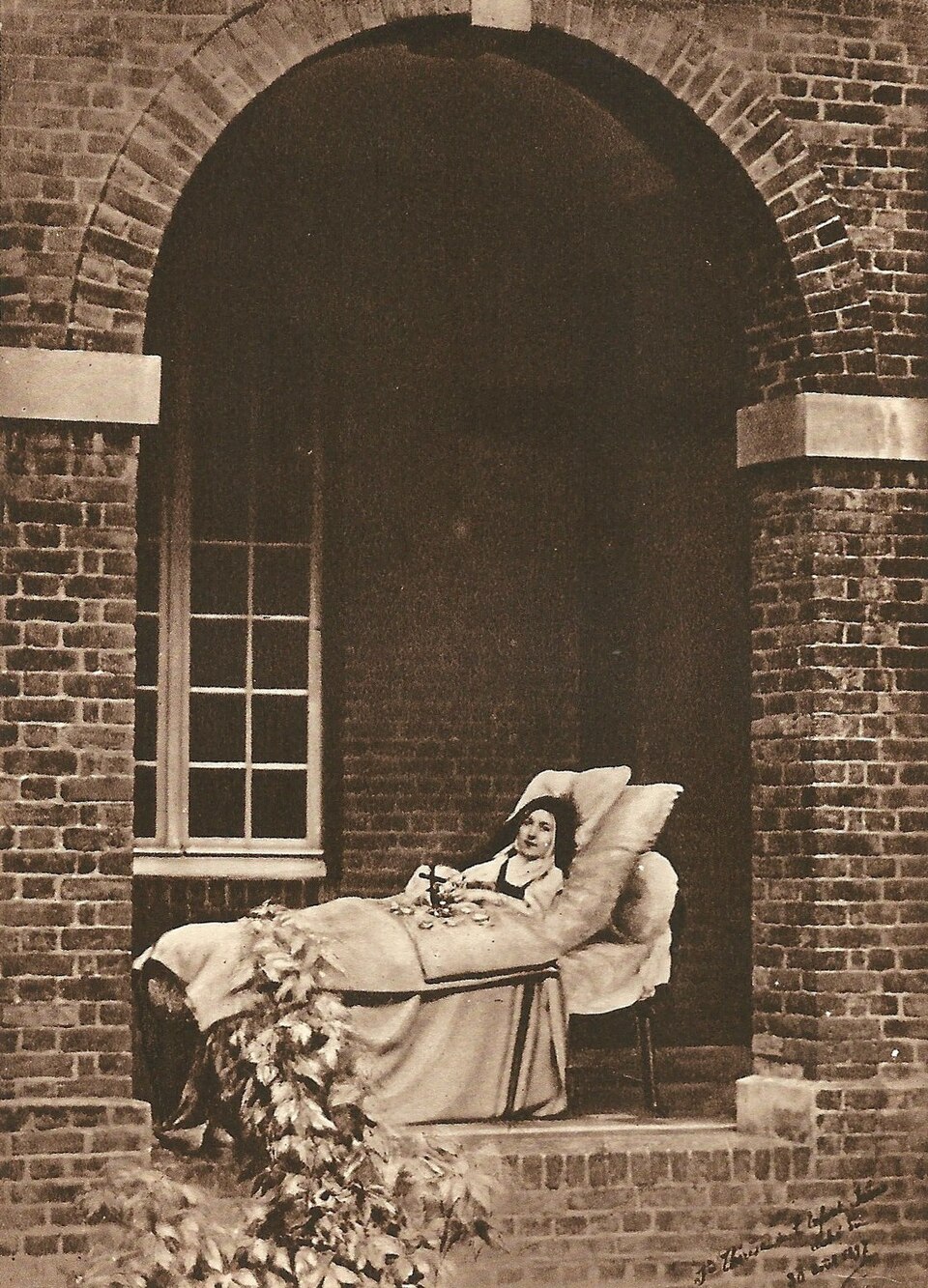
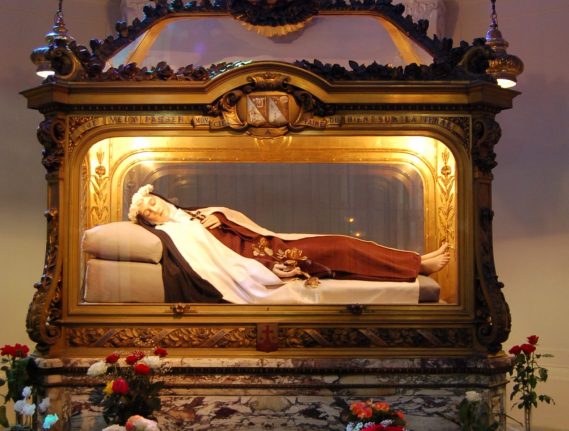
On the evening of September 30, 1897, after hours of agonizing suffocation, Thérèse gazed upon her crucifix and breathed her final words: "My God, I love You!" entering eternal life at the age of twenty-four. Her dying promise: "I want to spend my heaven doing good on earth; I will let fall a shower of roses" has been verified through unceasing miracles worldwide5.
V. Doctor Of The Universal Church And Christological Fulfillment
In 1925, Pope Pius XI canonized Thérèse and in 1927 proclaimed her Universal Co-Patroness of Foreign Missions alongside Saint Francis Xavier. On October 19, 1997, marking her centenary, Pope Saint John Paul II issued the Apostolic Letter Divini Amoris Scientia, formally declaring Saint Thérèse of Lisieux the 33rd Doctor of the Universal Church—the youngest saint ever to receive this supreme ecclesial accolade6.
Her official title Doctor Amoris (Doctor of Divine Love) affirms that her theology is not simplistic sentimentality, but an eminent synthesis of Gospel wisdom. Thérèse unveiled the heart of Christology: Christ does not demand intellectual grandeur, but seeks childlike hearts willing to surrender their infirmities to Infinite Mercy.
Almighty and Eternal God, who opens the gates of Your Kingdom to the humble and the little ones. Grant that we, following the example of Saint Thérèse of the Child Jesus, may faithfully walk the Little Way of spiritual childhood, surrendering our lives to Your Merciful Love, that we may share with her in the eternal vision of Your glory. Through Jesus Christ our Lord.
Scholarly Footnotes
- Pope Francis, Homily for the Canonization of Saints Louis Martin and Zélie Guérin, St. Peter's Square, Vatican, October 18, 2015. Quay lại vị trí vừa đọc [1]
- Saint Thérèse of Lisieux, Story of a Soul: The Autobiography of St. Thérèse of Lisieux, trans. John Clarke, OCD, Washington, DC: ICS Publications, 1996, pp. 68–74. Quay lại vị trí vừa đọc [2]
- Guy Gaucher, Story of a Life: St. Thérèse of Lisieux (1873–1897), San Francisco: Harper & Row, 1987, pp. 85–112. Quay lại vị trí vừa đọc [3]
- Conrad De Meester, The Power of Confidence: Genesis and Structure of the "Way of Spiritual Childhood", New York: Alba House, 1998, pp. 145–168. Quay lại vị trí vừa đọc [4]
- Hans Urs von Balthasar, Thérèse of Lisieux: The Story of a Mission, London: Sheed and Ward, 1953, pp. 192–215. Quay lại vị trí vừa đọc [5]
- Pope Saint John Paul II, Apostolic Letter Divini Amoris Scientia: Proclaiming Saint Thérèse of the Child Jesus a Doctor of the Universal Church, Vatican: Libreria Editrice Vaticana, October 19, 1997. Quay lại vị trí vừa đọc [6]
Standard Scholarly Bibliography
Second Vatican Ecumenical Council. Dogmatic Constitution on the Church (Lumen Gentium), chapter V on the Universal Call to Holiness, 1964.
Pope Saint John Paul II. Apostolic Letter Divini Amoris Scientia: Proclaiming Saint Thérèse of the Child Jesus a Doctor of the Universal Church. Vatican: Libreria Editrice Vaticana, 1997.
Pope Francis. Apostolic Exhortation C'est la confiance: On Confidence in the Merciful Love of God. Vatican: Libreria Editrice Vaticana, 2023.
Saint Thérèse of Lisieux. Story of a Soul: The Autobiography of St. Thérèse of Lisieux. Translated by John Clarke, OCD. Washington, DC: ICS Publications, 1996.
Gaucher, Guy. Story of a Life: St. Thérèse of Lisieux (1873–1897). San Francisco: Harper & Row, 1987.
De Meester, Conrad. The Power of Confidence: Genesis and Structure of the "Way of Spiritual Childhood". New York: Alba House, 1998.
Von Balthasar, Hans Urs. Thérèse of Lisieux: The Story of a Mission. London: Sheed and Ward, 1953.