The primacy of prior grace over moralism in Catholic life
Many Christians profess the Gospel as an announcement of saving mercy yet quietly live each day as though faith were merely a preventative code of moral safety, pushing God’s prior love into the rearview mirror of memory. Facing the foundational question of whether the Gospel is primarily redemptive or preventative, this scholarly article moves beyond a simplistic binary by returning to the grammar of Biblical Covenant – where the Indicative of Grace always precedes the Imperative of Law from Mount Sinai onward – and examining the Catholic Magisterium’s doctrine of prevenient grace (Gratia praeveniens) from the Second Council of Orange and the Council of Trent to modern encyclicals such as Deus Caritas Est, Veritatis Splendor, and Placuit Deo. Above all, through the dogma of Preventative Redemption (Redemptio praeservativa) revealed in the Immaculate Conception of the Blessed Virgin Mary, Catholic theology demonstrates that even our preservation from falling into sin is wholly an unmerited fruit of the Cross of Christ, opening a concrete path to liberate family catechesis and youth formation from the exhausting treadmill of legalism.
“In this is love, not that we loved God but that he loved us and sent his Son to be the expiation for our sins... We love, because he first loved us.”
I. The Paradox Between Redemptive Grace and Preventative Moralism
When you hear the word Gospel (Euangelion / Greek: εὐαγγέλιον), what image first rises before your mind? Is it a Father’s outstretched arms pulling a broken child out of an abyss, or a sturdy guardrail erected to keep a traveler from ever slipping over the edge? Framed in contemporary pastoral terms, is the Gospel of Jesus Christ primarily redemptive – rescuing and restoring humanity from ruin – or primarily preventative – equipping us with wise guidelines to avoid trouble and heartache in the first place?
At first glance, both dynamics pulse unmistakably through the ministry of Jesus of Nazareth. A redemptive Gospel proclaims a truth that shatters human calculation: “No matter what you have done and no matter what has been done to you, the Father’s door stands open for you to come home.” It is the glad tidings of forgiveness, repentance, restoration, second chances, and new creation (2 Cor 5:17). Its center of gravity rests entirely on God’s unconditional, personal love – the God who always makes the first move toward each human being.
Alongside it stands the preventative dimension: “Walk within God’s commandments to honor Him and express your love; as a fruit of wisdom, you will be spared a world of regret and relational ruin.” Its horizon is a flourishing life shaped by faithful habits – obedience, worship, discernment in friendship, generosity, speaking truthfully so that our “yes” means yes and our “no” means no (Mt 5:37 - RSV-2CE), and building our house upon solid rock so that it endures the storm (Mt 7:24–27). Where the redemptive dynamic focuses on God’s loving movement toward us, the preventative dynamic highlights our deliberate movement toward God.
1. When Redemption Recedes into the Past Tense of Everyday Life
Pressed to choose which dynamic is foundational, nearly every thoughtful believer instinctively names redemption. The entire arc of Christ’s Incarnation, public teaching, Passion, and Resurrection bends decisively toward the rescue of fallen humanity. Yet an unsettling paradox haunts ordinary Christian existence: we confess a redemptive Gospel with our lips while quietly living day to day as if the Gospel were primarily preventative.
This quiet drift is psychologically understandable. By default, many believers relegate God’s redeeming act to the past tense: “God redeemed me back then – at my Baptism or in a past moment of conversion – and now my task is to keep myself upright by ordering my life around His commands.” Often this posture arises from sincere goodwill rather than cynicism. One genuinely believes that God’s ways are crafted for human flourishing and authentic peace. Who desires to shatter their life through hidden addictions or wound the people they love? Walking within divine guidelines is undeniably wiser and spares us needless anguish.
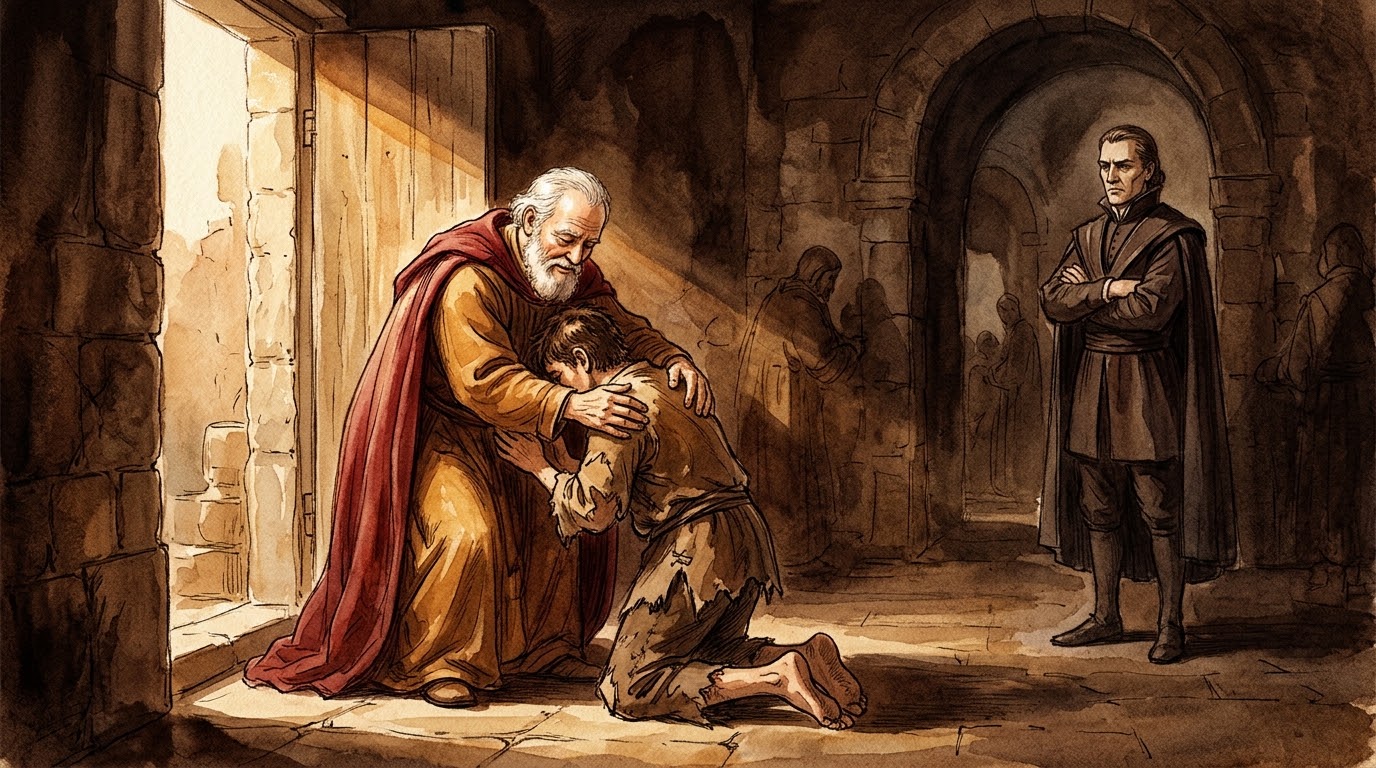
Yet the subtle trap hides within that very reasonableness. Because fallen human nature defaults to placing the self at the center of reality, we gradually cast ourselves as the primary actor in our own spiritual narrative. Over time, God’s initiating love recedes into the rearview mirror of memory, leaving the windshield entirely filled with moral checklists. Imperceptibly, we begin to resemble the elder brother in the Parable of the Merciful Father (Lk 15:25–32): faithfully keeping every rule for years while remaining tragically estranged from the liberating joy of sonship.
| Theological Dimension | Preventative Moralism (Legalistic Posture) | Redemptive Gospel & Prevenient Grace |
|---|---|---|
| Primary Actor | Human willpower striving upward toward God. | God taking the initiative to seek and love humanity first (1 Jn 4:19). |
| Role of Commandments | Prerequisite to prove fidelity and insulate oneself from pain. | Free, grateful response of a heart already liberated by Covenant love. |
| Tense of Grace | Relegated to past memory; the present feels like self-maintained duty. | Perpetual present tense – mercies “new every morning” (Lam 3:23 - RSV-2CE). |
| Spiritual Fruit | Spiritual exhaustion, anxious scrupulosity, or subtle moral pride. | Deep interior peace, humility, gratitude, and contagious charity. |
II. The Grammar of Biblical Covenant: The Indicative of Grace Precedes the Imperative of Law
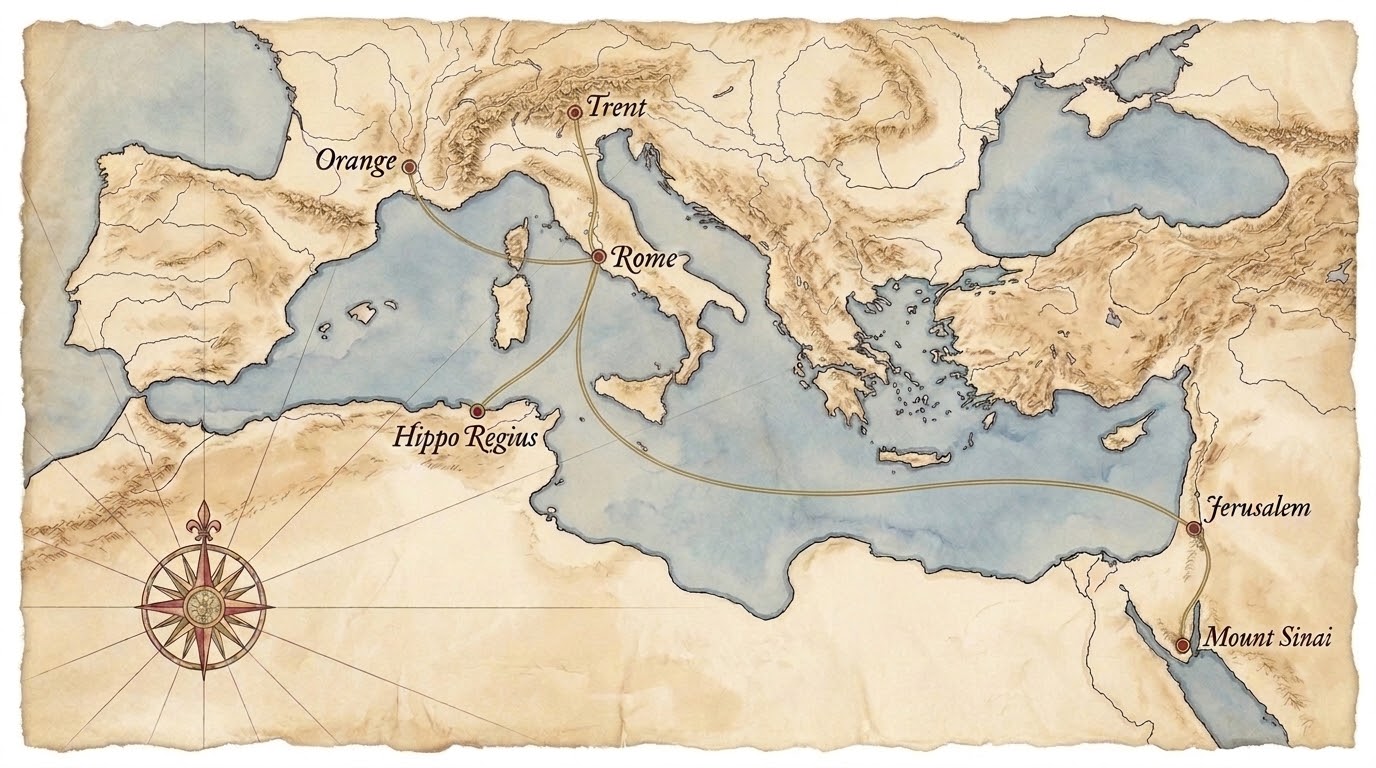
To discern the authentic architecture of divine revelation, Catholic biblical theology turns away from modern intuition and examines the grammar of Covenant running continuously from the Old Testament into the New. One of the landmark achievements of twentieth-century Ancient Near Eastern (ANE) archaeology and textual scholarship – pioneered by George Mendenhall and Kenneth Kitchen – revealed the structural parallel between the Sinai Covenant in Exodus and Deuteronomy and Hittite suzerainty treaties of the fourteenth and thirteenth centuries BCE1.
1. The Redemptive Prologue to the Decalogue and the True Meaning of Torah
In ancient diplomatic treaties, before enumerating a single binding stipulation, the Great King always began with a Historical Prologue recounting the concrete acts of rescue and benevolence already bestowed upon the vassal. Sacred Scripture elevated this cultural form to unveil the very heart of YHWH. Before issuing even one commandment atop Mount Sinai – even before prohibiting idolatry – the Lord proclaimed a thunderous Indicative of Grace:
“I am the LORD your God, who brought you out of the land of Egypt, out of the house of bondage. You shall have no other gods before me.”
This revealed sequence governs all of salvation history (Heilsgeschichte)2. God did not address Israel while they groaned under Egyptian taskmasters saying, “Keep these Ten Commandments first, and then I will consider rescuing you.” On the contrary, He redeemed them first through the Passover and the crossing of the Sea of Reeds, and only afterward bestowed the Law as the pathway to safeguard the freedom they had freely received.
Hebrew philology sharpens this insight further. When the Hebrew noun Torah (תּוֹרָה) was rendered in the Greek Septuagint as Nomos (νόμος), later readers easily mistook it for a dry juridical code. In its Semitic root (yārāh, “to point the way, to instruct”), Torah denotes a Father’s loving instruction, rooted inseparably in Berit (בְּרִית – Covenant) and Hesed (חֶסֶד – steadfast covenant mercy)3. Even amid the smoldering ruins of Jerusalem after the Babylonian destruction of 587 BCE, the poet of Lamentations anchored his hope in God’s unceasing present-tense mercy: “The steadfast love of the LORD never ceases, his mercies never come to an end; they are new every morning; great is thy faithfulness” (Lam 3:22–23 - RSV-2CE).

2. From New Testament Kerygma to the New Law of the Holy Spirit
In the New Testament, the syntax of grace preceding law reaches its incandescent zenith in Jesus Christ. In the Greco-Roman world, Euangelion (εὐαγγέλιον – Gospel) was an imperial herald’s announcement of a victory already won on the battlefield; it proclaimed an accomplished saving event, never a manual of self-improvement. Accordingly, the apostolic proclamation – the Kerygma (κήρυγμα) – invariably precedes moral instruction (Didache / διδαχή). Saint Paul states this with electrifying clarity: “God shows his love for us in that while we were yet sinners Christ died for us” (Rom 5:8 - RSV-2CE).
The very architecture of the Pauline epistles (such as Romans 1–11 followed by 12–16, or Ephesians 1–3 followed by 4–6) embodies this unbreakable theological order: first comes the jubilant announcement of what God has done in Christ (the Indicative), and only then does the decisive conjunction “Therefore” (οὖν – oun) summon believers to a corresponding way of life (the Imperative). Before the Kingdom of God ever issued a single rule, it issued a perpetual invitation to the wedding banquet.
Still deeper, Catholic doctrine – synthesized by Saint Thomas Aquinas and codified in the Catechism of the Catholic Church – teaches that the New Law (Lex Nova) of the Gospel is not merely a stricter set of preventative regulations than the Old Testament. Rather, “the New Law is primarily the grace of the Holy Spirit himself, who is given to those who believe in Christ” (CCC 1966)4. The prophetic promises of Jeremiah and Ezekiel – that God would inscribe His law upon human hearts and replace hearts of stone with hearts of flesh (Jer 31:31–34; Ezek 36:26–27) – are fulfilled at Pentecost. When the Holy Spirit acts from within, God’s commandments cease to feel like external barriers; they blossom as the law of love and authentic freedom (Rom 8:2; Jas 1:25).

III. The Catholic Magisterium on the Primacy of Prevenient Grace
The pastoral warning against trying to love God before experiencing God’s prior love touches one of the most consequential dogmatic controversies in two millennia of Church history: the defense of the absolute gratuitousness of divine grace.
1. From Saint Augustine and Orange II to the Council of Trent
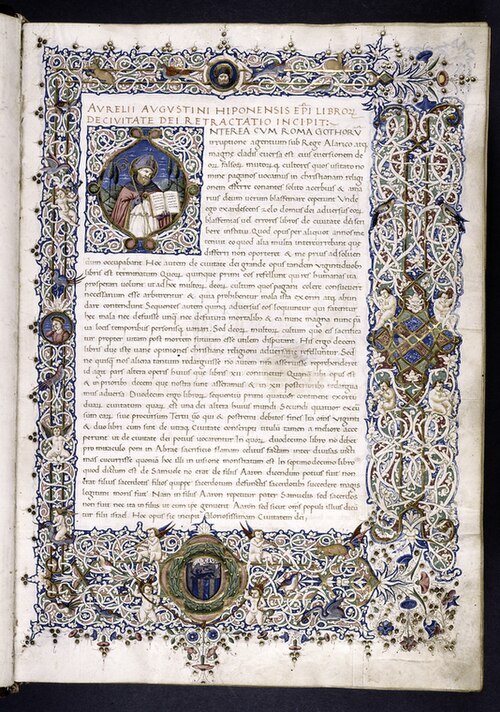
In the early fifth century, the British ascetic Pelagius taught that human beings, through natural free will and the moral example of Christ, possess sufficient inner strength to keep God’s commandments and avoid sin without interior healing grace. In contemporary terms, Pelagianism was the ultimate incarnation of a purely “preventative gospel”: salvation reduced to disciplined moral self-preservation. Confronting this error head-on, Saint Augustine of Hippo (354–430) demonstrated from Scripture that wounded human freedom cannot lift itself to supernatural charity on its own. His immortal prayer in the Confessions (X, 29) crystallizes Catholic orthodoxy: “Grant what You command, and command what You will” (Da quod iubes et iube quod vis)5.
Going even further, the Second Council of Orange (529 CE) – confirmed by Pope Boniface II – rejected Semi-Pelagianism as well, namely the notion that while grace is needed to complete good works, the very first movement toward God (initium fidei) originates from human initiative alone. The Council dogmatically declared that even the desire to be cleansed and the earliest spark of faith are awakened by the Holy Spirit going before us (Canons 3–7). Over a millennium later, the Ecumenical Council of Trent (Session VI, 1547, Decree on Justification) solemnly reaffirmed the doctrine of prevenient grace (Gratia praeveniens): the beginning of justification in adults derives solely from the prevenient grace of God through Jesus Christ, entirely apart from prior human merits (DS 1525; CCC 1996–2005)6.
2. Modern Magisterium and the Warning Against Neo-Pelagianism
In the twenty-first century, the Magisterium has repeatedly sounded the alarm against a subtle revival of self-reliant preventative moralism, termed Neo-Pelagianism. In the encyclical Veritatis Splendor (1993), Pope Saint John Paul II meditates deeply on Jesus’ dialogue with the rich young man (Mt 19:16–22): here was a young believer who had mastered the preventative model – keeping every commandment from his youth – yet remained haunted by an existential ache. Jesus neither abolishes the commandments nor treats them as an end in themselves; He invites the young man beyond moral rule-keeping into personal communion with the Savior (Veritatis Splendor, nos. 19–24)7.
Echoing this vision in Evangelii Gaudium (2013), Pope Francis coined the vivid Spanish verb primerear – “taking the first step” – to describe God’s eternal posture toward humanity (no. 24). Crucially, he directly counters the tendency to leave the Kerygma in the rearview mirror of past conversion:
“We must not think that in catechesis the kerygma gives way to a supposedly more ‘solid’ formation. Nothing is more solid, profound, secure, meaningful and wisdom-filled than that initial proclamation. All Christian formation consists of entering more deeply into the kerygma, which is reflected in and constantly illumines the work of catechesis” (Evangelii Gaudium, no. 165)8. In 2018, the Congregation for the Doctrine of the Faith issued the letter Placuit Deo, warning that Neo-Pelagianism – trusting in individual willpower and strict rule-following to secure salvation – empties the Cross of Christ of its power and turns the Gospel into a soul-crushing burden (Placuit Deo, no. 3)9.

IV. The Supreme Catholic Synthesis: The Mystery of “Preventative Redemption”
If reflection remains solely on the pastoral contrast between “redemption” (God moving toward us) and “prevention” (us moving toward God), a subtle dualism still lingers. At precisely this junction, Catholic dogmatic theology offers a breathtaking synthesis that transcends the entire dilemma: the doctrine of Preventative Redemption (Redemptio praeservativa).
At the turn of the fourteenth century, the Blessed Franciscan theologian John Duns Scotus (c. 1266–1308) resolved a classic scholastic question: If the Blessed Virgin Mary was preserved free from all stain of original sin from the first instant of her conception, did she still need Christ as her Redeemer? Scotus answered with a crystal-clear analogy that any high school student or seasoned theologian can grasp immediately:
Imagine a traveler walking straight toward a deep, treacherous pit. One rescuer waits until the traveler plunges in, breaks bones, and sinks into the mire, then climbs down to lift and heal them – this is liberative redemption (redemptio liberativa). A second rescuer steps forward ahead of time and catches the traveler at the very brink so they never fall in at all – this is preventative redemption (redemptio praeservativa). Who is the more perfect Redeemer? Unquestionably the Savior capable of both – whose redeeming power shines most luminously when it preserves from ruin beforehand!
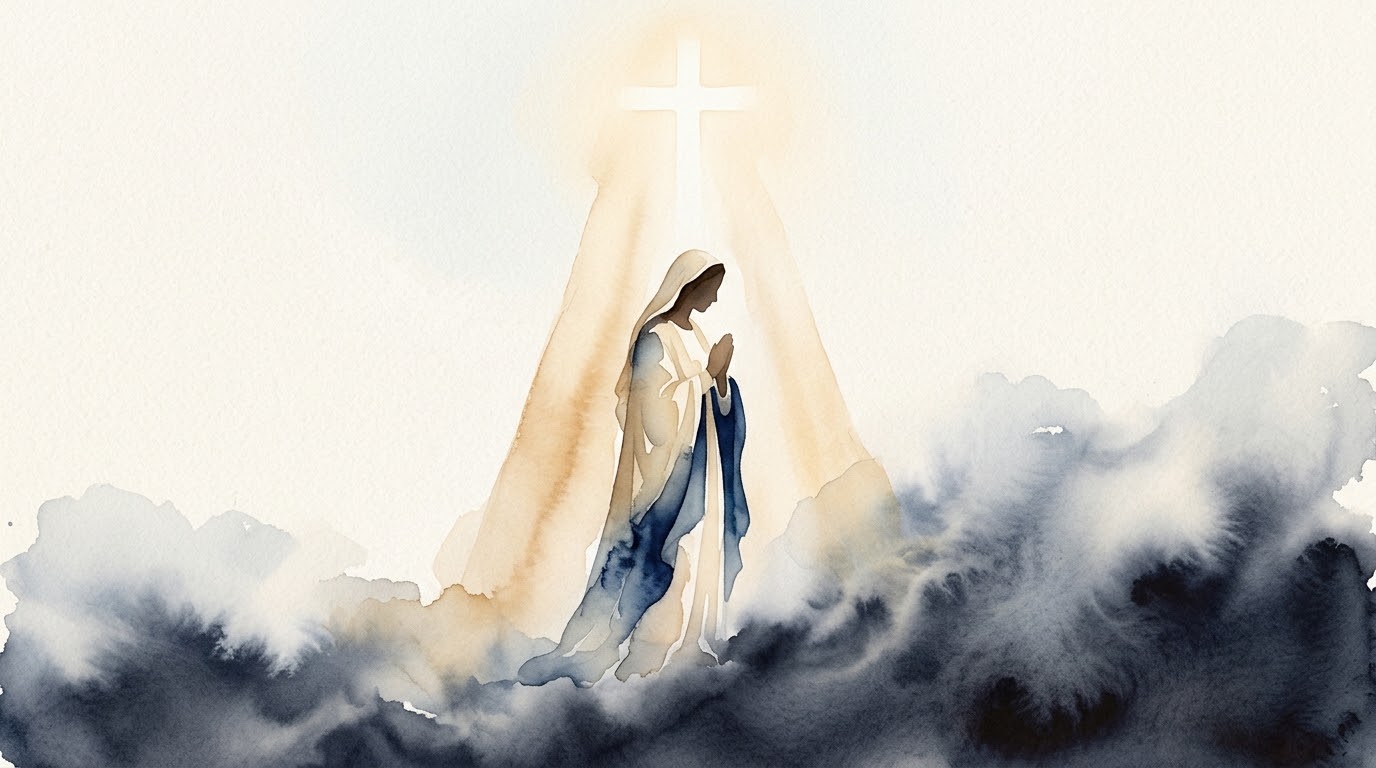
Blessed Pope Pius IX solemnly defined this theological insight as dogma in the Apostolic Constitution Ineffabilis Deus (1854), echoed by the Catechism of the Catholic Church: “Mary was redeemed, in a more exalted fashion, by reason of the merits of her Son” (CCC 492; Lumen Gentium 53)10. The existential implication for every Christian is revolutionary: In God’s economy of salvation, even authentic “prevention” is wholly a work of redemptive grace!
V. Transforming the Language of Faith: From the Legalistic Treadmill to Encounter
These biblical and Magisterial foundations speak directly to an urgent pastoral wound in Christian homes and youth ministry today. Countless devout parents long for their children to love God, yet their day-to-day language and posture are overwhelmingly preventative rather than redemptive. When seeking pastoral counsel, parents frequently plead, “We want our children to love God, attend Mass, avoid bad company, and obey the rules” – while rarely asking, “Have our children ever personally experienced God’s unconditional, pursuing love for them right in the midst of their teenage struggles and imperfections?”
1. The Cost of Demanding Love Before Encountering Being Loved
Asking a young person to love God and maintain moral discipline before they have tasted God’s prior love for them is like demanding fruit from a branch severed from the vine. Inevitably, faith mutates into a soul-draining “try-harder treadmill”. Some young people grow cynical and walk away, perceiving Christianity as a joyless list of prohibitions; others fall into crushing shame whenever they stumble, convinced that the Father’s house welcomes only the flawless.
Here the unrepeatable genius of the Christian Gospel shines among all human philosophies and religions. Many systems instruct humanity how to climb upward through self-discipline to reach the Divine. Only the Gospel of Jesus Christ announces the scandalous inversion: God emptied Himself and descended into our brokenness to love us first (Phil 2:6–8). As Saint Thérèse of Lisieux – the Doctor of the Church who dismantled the grim nineteenth-century legalism of Jansenism – famously realized, the elevator lifting us to heaven is never our own exhausted climbing, but the merciful arms of Jesus Christ11.
2. Three Pastoral Shifts for Christian Families and Discipleship
In harmony with the Pontifical Council for Promoting the New Evangelization’s Directory for Catechesis (2020, nos. 57–60), renewing how we live and pass on the faith calls for three concrete shifts in posture and language12:
- Move from the “Rearview Mirror” to the “Sacramental Present”: Refuse to treat redemption as an expired ticket stamped at Baptism. Every Eucharistic Liturgy – re-presenting the sacrifice of Calvary – and every Confession testifies tangibly that God’s redeeming mercy is acting in the present tense right now.
- Move from “Behavioral Control” to “Domestic Witness of Mercy”: Before correcting flaws or enforcing household norms, Catholic parents are called to be the first visible sacrament of unconditional love. Only when a child knows that failure cannot erase their belonging in their parents’ hearts can they genuinely trust a Heavenly Father who runs out to embrace the returning prodigal.
- Frame Commandments as the Grammar of Freedom and Gratitude: When guiding youth through moral teachings – honesty, chastity, solidarity – begin with the question: “What sacred dignity and joy in you is this commandment protecting?” Then obedience ceases to feel like heavy compliance and becomes the grateful song of a heart secure in love.
Jesus Christ is not a distant legislator handing down a cold handbook of risk management; He Himself is the Incarnate Redemptive Gospel. Through His Paschal Mystery, He takes our ruin upon Himself to rescue and restore us (redemptio liberativa), while pouring forth the Holy Spirit to guard and uphold us from falling day by day (redemptio praeservativa). Redemption comes first, redemption accompanies every faithful step, and redemption crowns the journey – so that our love for God forever remains a grateful echo of the Love that loved us first.
Scholarly & Pastoral FAQ
Not at all. In Catholic theology, grace never cancels morality; it provides morality’s true foundation and interior power. Commandments are never a price paid to purchase God’s affection, but the concrete grammar through which liberated hearts protect their dignity and return love for love. Losing redemption turns law into crushing legalism; discarding law reduces mercy to “cheap grace” detached from real conversion.
Pelagianism claims that human beings can initiate love for God and keep the moral law solely through natural willpower. Catholic dogma (Second Council of Orange, Council of Trent, CCC 1996–2001) teaches that God always takes the first step (primerear): every longing for goodness, every turn of repentance, and every ounce of fidelity begins with Christ’s unmerited grace awakening and empowering human freedom.
Rather than tightening restrictions or leaning on fear-based warnings, parents should prayerfully examine whether their home communicates “preventative control” or “redemptive belonging.” Prioritize patient listening, unconditional forgiveness, and honest witness to how God’s mercy has met the parents in their own weaknesses. When young people encounter the Father’s compassionate face in their home, moral guidelines become believable pathways to joy.
Discussion Prompts for Study Groups & Families
- Looking back over the past week, where did you catch yourself living your faith like a “try-harder treadmill” driven by fear of failure rather than the joy of being loved first?
- How does seeing God open the Ten Commandments with the liberation from Egypt (Ex 20:2) reshape the way you view the moral teachings of the Catholic Church?
- Within your family, parish, or youth community, what is one concrete shift in language or posture that can bring the Kerygma of redemptive love out of the “rearview mirror” and back to the center?
“O Lord, Father of boundless mercy, who loved us before we could speak Your name and whose compassions are made new every morning: deliver our hearts from the weary pride of legalism. Never let us relegate the redeeming Cross of Jesus to a distant memory, but anchor us in the living present of Your prevenient grace. May Your Holy Spirit inscribe the New Law of love within us, so that every commandment we keep and every word of faith we pass on to the next generation may radiate the liberating joy of children unconditionally loved. Through Jesus Christ our Lord.”
Scholarly Footnotes
- George E. Mendenhall, Law and Covenant in Israel and the Ancient Near East (Pittsburgh: Biblical Colloquium, 1955), pp. 24–50; Kenneth A. Kitchen and Paul J. N. Lawrence, Treaty, Law and Covenant in the Ancient Near East, vol. 3 (Wiesbaden: Harrassowitz Verlag, 2012), pp. 129–162. Quay lại vị trí vừa đọc [1]
- Rev. Joseph Pham Quoc Tuan, Giao Ước Trong Kinh Thánh (Covenant in Sacred Scripture) (Xuan Loc: St. Joseph Major Seminary Course Notes, 2023), ch. II: “Structure of the Sinai Covenant and Historical Prologue.” Quay lại vị trí vừa đọc [2]
- John Bergsma and Brant Pitre, A Catholic Introduction to the Bible: The Old Testament (San Francisco: Ignatius Press, 2018), pp. 158–169; Pontifical Biblical Commission, The Bible and Morality: Biblical Roots of Christian Conduct (Vatican City: Libreria Editrice Vaticana, 2008), nos. 19–25. Quay lại vị trí vừa đọc [3]
- Saint Thomas Aquinas, Summa Theologiae, I-II, q. 106, a. 1: “Whether the New Law is a Written Law or One Instilled in the Heart”; Catechism of the Catholic Church (CCC), nos. 1965–1974. Quay lại vị trí vừa đọc [4]
- Saint Augustine of Hippo, Confessions, Book X, ch. 29, no. 40; see also De Gratia et Libero Arbitrio (On Grace and Free Will), ch. 17. Quay lại vị trí vừa đọc [5]
- Heinrich Denzinger and Peter Hünermann, eds., Enchiridion Symbolorum, Definitionum et Declarationum de Rebus Fidei et Morum (DS), Second Council of Orange (529), DS 373–377; Ecumenical Council of Trent, Session VI, Decretum de Iustificatione (1547), ch. 5, DS 1525 and Canons 1–3, DS 1551–1553. Quay lại vị trí vừa đọc [6]
- Pope Saint John Paul II, Encyclical Letter Veritatis Splendor, Vatican City, August 6, 1993, nos. 16–24. Quay lại vị trí vừa đọc [7]
- Pope Francis, Apostolic Exhortation Evangelii Gaudium, Vatican City, November 24, 2013, nos. 24 and 164–165. Quay lại vị trí vừa đọc [8]
- Congregation for the Doctrine of the Faith, Letter Placuit Deo to the Bishops of the Catholic Church on Certain Aspects of Christian Salvation, Vatican City, February 22, 2018, nos. 3–4 and 8–11. Quay lại vị trí vừa đọc [9]
- Blessed Pope Pius IX, Apostolic Constitution Ineffabilis Deus (December 8, 1854), DS 2803; Second Vatican Council, Dogmatic Constitution Lumen Gentium (1964), no. 53; Catechism of the Catholic Church, nos. 491–492. Quay lại vị trí vừa đọc [10]
- Saint Thérèse of Lisieux, Story of a Soul: Manuscript C, 3r; Pope Francis, Apostolic Exhortation C'est la confiance (2023), nos. 15–20. Quay lại vị trí vừa đọc [11]
- Pontifical Council for Promoting the New Evangelization, Directory for Catechesis (Vatican City: Libreria Editrice Vaticana, 2020), nos. 57–60. Quay lại vị trí vừa đọc [12]
Scholarly Bibliography
Aquinas, Thomas. Summa Theologiae, Prima Secundae (I-II), qq. 106–114. Rome: Leonine Edition, 1892.
Augustine of Hippo. Confessions; On Grace and Free Will (De Gratia et Libero Arbitrio). Patrologia Latina 32 & 44.
Benedict XVI. Encyclical Letter Deus Caritas Est (God Is Love). Vatican City: Libreria Editrice Vaticana, 2005.
Bergsma, John, and Brant Pitre. A Catholic Introduction to the Bible: The Old Testament. San Francisco: Ignatius Press, 2018.
Catechism of the Catholic Church. 2nd ed. Vatican City: Libreria Editrice Vaticana, 1997.
Congregation for the Doctrine of the Faith. Letter Placuit Deo on Certain Aspects of Christian Salvation. Vatican City: Libreria Editrice Vaticana, 2018.
Denzinger, Heinrich, and Peter Hünermann, eds. Compendium of Creeds, Definitions, and Declarations on Matters of Faith and Morals. 43rd ed. San Francisco: Ignatius Press, 2012.
Francis. Apostolic Exhortation Evangelii Gaudium (The Joy of the Gospel). Vatican City: Libreria Editrice Vaticana, 2013.
John Paul II. Encyclical Letter Veritatis Splendor (The Splendor of Truth). Vatican City: Libreria Editrice Vaticana, 1993.
Kitchen, Kenneth A., and Paul J. N. Lawrence. Treaty, Law and Covenant in the Ancient Near East. 3 vols. Wiesbaden: Harrassowitz Verlag, 2012.
Mendenhall, George E. Law and Covenant in Israel and the Ancient Near East. Pittsburgh: Biblical Colloquium, 1955.
Pontifical Biblical Commission. The Bible and Morality: Biblical Roots of Christian Conduct. Vatican City: Libreria Editrice Vaticana, 2008.
Pontifical Council for Promoting the New Evangelization. Directory for Catechesis. Vatican City: Libreria Editrice Vaticana, 2020.
Second Vatican Council. Dogmatic Constitution on the Church (Lumen Gentium), 1964; Dogmatic Constitution on Divine Revelation (Dei Verbum), 1965.