From the Wilderness of Sinai to the Glory of Jerusalem
Unlike the idol-bearing shrines of the ancient Near East, the Ark of the Covenant was crowned by an empty Mercy Seat in the Holy of Holies, proclaiming a transcendent God whose presence dwelled livingly among His covenant people. The Ark of the Covenant (Hebrew: אֲרוֹן הַבְּרִית, ’Arōn Ha-Bərīt) was the most sacred artifact constructed in the 13th–12th century BCE at the foot of Mount Sinai under divine instruction delivered to Môsê (Moses / Hebrew: מֹשֶׁה). The acacia chest overlaid with pure gold preserved the two stone Tablets of the Law—the foundational testimony of the eternal covenant between God and the twelve tribes of Israel. During Israel's formative centuries, the Ark parted the floodwaters of the Jordan River and spearheaded the fall of Jericho, before being brought to Jerusalem by King Đavít (David / Hebrew: דָּוִד) in jubilant procession and enthroned with supreme splendor within the Holy of Holies of the First Temple built by King Salômôn (Solomon / Hebrew: שְׁלֹמֹה). Although it suffered crisis and capture by the Philitinh (Philistines) at Eben-ezer and disappeared mysteriously when imperial Babylon destroyed Jerusalem in 587/586 BCE, the Ark reached its ultimate fulfillment in the New Testament within the Body of Christ—the true Propitiation—and in the Blessed Virgin Mary, the living Ark of the New Covenant carrying the Living Word for the salvation of all nations.
“They shall make an ark of acacia wood; two cubits and a half shall be its length, a cubit and a half its breadth, and a cubit and a half its height. And you shall overlay it with pure gold, within and without shall you overlay it... And you shall put the mercy seat on the top of the ark; and in the ark you shall put the testimony that I shall give you. There I will meet with you, and from above the mercy seat, from between the two cherubim that are upon the ark of the testimony, I will speak with you of all that I will give you in commandment for the people of Israel.”
I. The Sacred Identity and Divine Craftsmanship at Sinai
In the desolate wilderness of the Sinai peninsula during the Late Bronze Age, sacred history witnessed a foundational theophany that defined Israel's liturgical identity. According to the Book of Exodus, God did not merely reveal the Ten Commandments as the moral framework of the Covenant; He provided Môsê with detailed architectural specifications for a portable desert sanctuary: the Tabernacle (Mishkan) and its supreme center, the Ark of the Covenant (’Arōn Ha-Bərīt)1.
The task of craftsmanship was entrusted to Bơxalêên (Bezalel) of the tribe of Judah, endowed with divine wisdom, understanding, and artistic skill (Ex 31:1–5). The chest measured 2.5 cubits in length, 1.5 cubits in breadth, and 1.5 cubits in height (approximately 115 cm × 68 cm × 68 cm). The structural core was built of acacia wood (shittim)—a desert wood noted for its extraordinary density, imperviousness to water rot, and resistance to wood-boring insects in arid climates. The chest was then overlaid completely with pure gold inside and out, crowned with an ornamental golden rim moulding around the top edge2.

Four golden rings were fastened to its four feet, through which two gold-plated acacia poles were inserted. According to divine command, these carrying poles were never to be removed from the rings (Ex 25:15). This injunction carried profound theological significance: Israel's God was not a localized deity chained to fixed terrestrial shrines; He was a pilgrim God journeying alongside His people across the hardships of the desert.
Crowning the chest was the Mercy Seat (כַּפֹּרֶת, Kapporeth), hammered from a single block of pure solid gold. At each end, two golden Cherubim (כְּרֻבִים, Keruvim) faced one another with outspread wings arched upward, overshadowing the sacred space between them. Inside the Ark, Moses placed the two stone Tablets of the Law (Deut 10:1–5). Subsequent biblical tradition, preserved in Exodus 16:33–34, Numbers 17:10, and Hebrews 9:4, recorded that the Ark also contained a golden vessel holding desert Manna and the miraculous budding staff of the High Priest Aaron—perpetual relics of divine Law, Heavenly Nourishment, and Priesthood3.
II. The Sacred Journey and Triumphant Entry into the Promised Land
Throughout the forty years of wandering, the Ark served as the divine vanguard leading the twelve tribes. Whenever the Ark set out, Moses cried aloud: “Arise, O Lord, and let your enemies be scattered, and let those who hate you flee before you!”; and when it rested, he prayed: “Return, O Lord, to the ten thousand thousands of Israel!” (Num 10:35–36)4.
The sacred role of the Ark reached a dramatic climax when the second generation prepared to cross into Canaan under Giôsuê (Joshua / Hebrew: יְהוֹשֻׁעַ). At harvest time, the Jordan River overflowed its banks, presenting an impassable barrier. Under divine instruction, Levitical priests bearing the Ark stepped into the raging torrent. The instant their feet touched the water's edge, the upstream waters halted and rose up in a heap as far back as the town of Adam, while the downstream flow drained into the Dead Sea (Josh 3:14–17)5. The entire nation crossed over on dry ground while the Ark stood firm in the riverbed. This miracle confirmed Joshua's authority as the true successor of Moses and demonstrated to Canaanite kingdoms that the living God was present in majesty.
At Giê-ri-khô (Jericho / Hebrew: יְרִיחוֹ), the Ark was central to an unprecedented conquest. Instead of siege engines and ladders, armed men and seven priests sounding rams' horns processed around the city walls for six consecutive days. On the seventh day, after circling seven times, amidst blast of shofars and a tremendous battle shout, the fortified walls collapsed outward (Josh 6:1–20). The biblical author underscores a core theological reality: ultimate salvation and inheritance stem not from human weaponry, but from obedient covenant faith.
III. The Crisis at Shiloh Philistine Exile and King David's Call
Following the settlement of the tribes, the Ark was sheltered within the Tabernacle at Silô (Shiloh / Hebrew: שִׁלֹה) in Ephraimite territory (Josh 18:1). For over three centuries during the Judges era, Shiloh functioned as the religious center of the tribal confederacy. Here the devout Hannah prayed for a child, and young Samuel received his nocturnal prophetic calling beside the Ark of God (1 Sam 3:3)6.
Yet moral corruption among the priesthood—embodied by Hophni and Phinehas, sons of High Priest Eli—led to catastrophe. Clashing with the Philistines at Épvên-Êde (Eben-ezer / Hebrew: אֶבֶן הָעֵזֶר), Israel suffered initial defeat. Instead of repenting, the elders reasoned: “Let us bring the ark of the covenant of the Lord here from Shiloh, that it may come among us and save us from the power of our enemies” (1 Sam 4:3). They reduced the transcendent Creator to a magical fetish.
The outcome was devastating: thirty thousand Israelite foot soldiers fell, Hophni and Phinehas were slain, and the Philistines captured the Ark. Upon hearing the news, Eli fell backward, broke his neck, and died, while his dying daughter-in-law named her newborn son Ichabod: “The glory has departed from Israel, for the ark of God has been captured” (1 Sam 4:21–22)7.
Nevertheless, the Ark's captivity was no triumph for paganism. When the Philistines set the Ark inside the temple of Dagon in Átsđốt (Ashdod), the statue of Dagon collapsed facedown before the Ark; the next morning, it was found shattered with its head and hands severed upon the threshold (1 Sam 5:1–5). Plagues ravaged Ashdod, Gath, and Ekron, compelling Philistine rulers to return the Ark on a new cart drawn by two unguided cows to Bết-Sêmes (Beth-shemesh). It was subsequently sheltered reverently at Abinadab's house in Kiriat-Giaarim (Kiriath-jearim) for decades8.
When King Đavít unified the realm and captured Mount Zion, his primary religious act was to bring the Ark of the Covenant into Jerusalem. After the solemn lesson at the threshing floor of Nacon when Uzzah touched the Ark inappropriately (2 Sam 6:6–7), David organized the final translation with profound liturgical awe. Clad only in a humble linen priestly ephod, David danced with all his might before the Lord amidst sounding shofars and shouting multitudes (2 Sam 6:12–19). This event transformed Jerusalem from a Jebusite stronghold into the eternal Holy City of God.
IV. The Splendor of Enthronement in Solomon's Holy of Holies
David's longing to build a permanent temple of cedar was fulfilled by his son, King Salômôn (1 Kings 5:17–19). Around 966 BCE, Solomon commenced construction of the First Temple on Mount Moriah, where Abraham had offered Isaac.
Following seven years of construction with Phoenician masonry and Lebanese cedar, the Temple was dedicated during the Feast of Booths. Levitical priests carried the Ark into the innermost sanctuary: the Holy of Holies (דְּבִיר, Debir)9.
There, the Ark rested beneath the outstretched wings of two colossal Cherubim carved from olive wood overlaid with gold. Each stood ten cubits high with a ten-cubit wingspan, their wings touching the opposing walls and meeting above the Ark in a protective arch (1 Kings 6:23–28).
As the priests withdrew, the Glory Cloud (שְׁכִינָה, Shekinah) filled the Temple so intensely that the priests could not stand to minister (1 Kings 8:10–11). The pilgrimage of the wilderness was complete; the Ark had found its permanent resting place, making Jerusalem the meeting point between heaven and earth.
V. Ancient Near Eastern Archaeology and the Mystery of Disappearance
In contemporary biblical scholarship, comparing Scripture with the archaeological realia of the Ancient Near East (ANE) illuminates both the historical authenticity and the profound theological singularity of Israel's faith10.
Craftsmanship parallels are striking. Archaeological discoveries from New Kingdom Egypt (14th–13th century BCE), especially Howard Carter's 1922 excavation of Tutankhamun's tomb (KV62), revealed a gilded wooden Anubis shrine chest (Cairo Museum JE 61444) mounted on a sledge with carrying poles inserted through fixed golden rings, matching the Exodus 25 specifications11. Relinquished reliefs at Medinet Habu and Luxor depict sacred barques carried upon priests' shoulders during liturgical processions.
Similarly, the cherub-throne motif appears on the 10th-century BCE Ahiram sarcophagus at Byblos (Beirut National Museum), depicting a king enthroned upon winged sphinx-cherubim12.
Yet, within these physical similarities lies Israel's revolutionary departure: absolute Aniconism. While pagan chests contained physical idols viewed as indwelt by a god, the Ark of the Covenant featured an empty Mercy Seat. The cherubim overshadowed empty space where the invisible Lord reigned in transcendent holiness. The God of Israel could not be carved by human hands; He revealed Himself through His Word and His saving deeds in history.
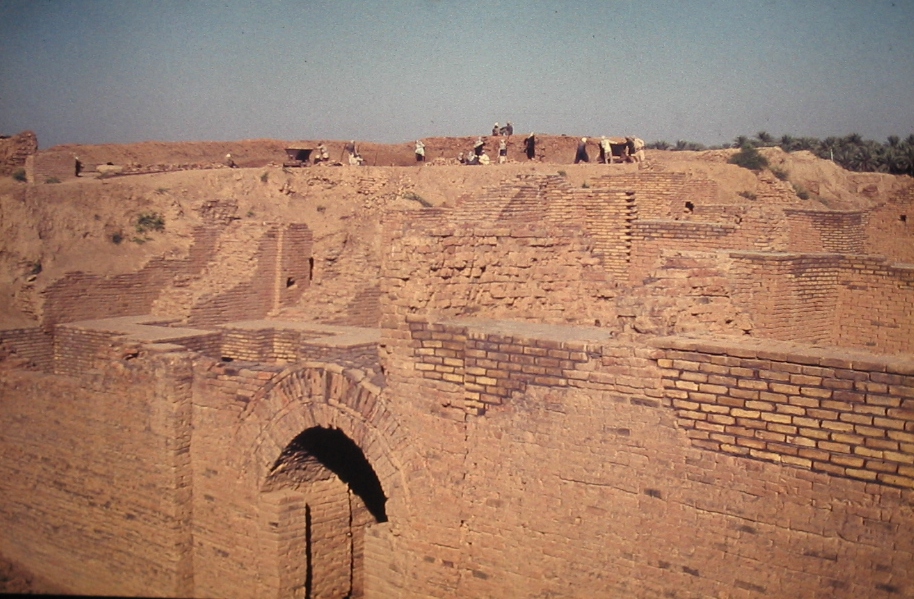
The Ark's eventual disappearance remains an enduring historical mystery. When Nabucođônôxo (Nebuchadnezzar II) sacked Jerusalem in 587/586 BCE, destroying Solomon's Temple, 2 Kings 25:13–17 and Jeremiah 52:17–23 provide an exhaustive inventory of bronze pillars, basins, and golden vessels carried off to Babylon. The Ark of the Covenant is conspicuously unmentioned.
Several traditions have emerged:
- 2 Maccabees 2:4–8 Tradition: Records that the Prophet Giêrêmia (Jeremiah) was divinely warned to hide the Ark, Tabernacle, and Incense Altar in a sealed cave on Mount Nebo until the eschatological ingathering of God's people13.
- Ethiopian Orthodox Tradition (Kebra Nagast): Holds that Menelik I, son of Solomon and the Queen of Sheba, brought the true Ark to Aksum, where it is guarded today at the Church of Our Lady Mary of Zion.
- Critical Archaeological View: Most historians (e.g., Roland de Vaux, Kenneth Kitchen) conclude the Ark was destroyed and stripped of its gold during the Babylonian sack of 587 BCE.
VI. Christological Fulfillment and the Mystery of the New Ark
In Catholic biblical theology and the framework of Salvation History (Heilsgeschichte), the physical disappearance of the golden Ark was not a tragic accident, but a step in Divine Pedagogy preparing for the New Covenant.
Prophet Jeremiah foresaw this transformation amidst the crumbling kingdom of Judah:
“And when you have multiplied and increased in the land, in those days, says the Lord, they shall no more say, ‘The ark of the covenant of the Lord.’ It shall not come to mind, or be remembered, or missed; it shall not be made again. At that time Jerusalem shall be called the throne of the Lord.”
This prophecy found fulfillment in Jesus Christ. In Romans 3:25, Saint Paul applies the Greek term Hilasterion (the Septuagint translation of Kapporeth, Mercy Seat) to Christ: “whom God put forward as an expiation [Hilasterion - Mercy Seat] by his blood, to be received by faith”14. On Calvary, as Christ died, the Temple veil tore in two (Mt 27:51). His sacrificial Blood atoned upon the eternal Mercy Seat once and for all, opening access to the Father for all humanity.
Jesus Christ is the living reality prefigured by the Ark: the Incorruptible Acacia Wood of sinless human nature; the Pure Gold of uncreated divine majesty; the True Law written in hearts; the Living Bread from heaven; and the Eternal High Priest who entered the heavenly Holy of Holies.
In harmony with Christology, early Patristic tradition—including Saint Ephrem, Saint Ambrose, Saint John of Damascus, and Saint Augustine—recognized a sublime Marian typology: The Blessed Virgin Mary is the Ark of the New Covenant (Foederis Arca)15.
The structural parallels between David's procession in 2 Samuel 6 and Mary's Visitation in Luke 1 are undeniable:
- David arose and went to the hill country of Judah for the Ark (2 Sam 6:2) $\leftrightarrow$ Mary arose and went into the hill country of Judah (Lk 1:39).
- David exclaimed with awe: “How can the ark of the Lord come to me?” (2 Sam 6:9) $\leftrightarrow$ Elizabeth cried out: “Why is this granted me, that the mother of my Lord should come to me?” (Lk 1:43).
- David danced before the Ark clad in linen (2 Sam 6:14) $\leftrightarrow$ John the Baptist leaped for joy in Elizabeth's womb (Lk 1:44).
- The Ark remained three months in the house of Obed-edom bringing blessings (2 Sam 6:11) $\leftrightarrow$ Mary remained three months with Elizabeth (Lk 1:56).
This typology reaches its climax in Revelation: “Then God's temple in heaven was opened, and the ark of his covenant was seen within his temple” (Rev 11:19)—and immediately in the very next verse: “And a great portent appeared in heaven, a woman clothed with the sun, with the moon under her feet, and on her head a crown of twelve stars” (Rev 12:1). Mary is the living Ark bearing within her virginal womb the Incarnate Word of God.
“O God of the everlasting Covenant, who of old didst enthrone Thy majesty upon the Mercy Seat of the desert Ark to guide Thy chosen people through all adversity. We praise Thee because in Jesus Christ Thou hast sealed the New and Eternal Covenant in His redeeming Blood, and in Mary, the immaculate Ark of the New Covenant, Thou hast brought salvation near to our hearts. Grant us grace to revere Thy divine presence in the Most Blessed Sacrament, to walk faithfully in Thy law of love, and to persevere on our earthly pilgrimage until we behold Thy glory face to face in the heavenly Jerusalem.”
Scholarly Footnotes
- Roland de Vaux, OP, Ancient Israel: Its Life and Institutions (London: Darton, Longman & Todd, 1961), pp. 297–302. Analysis of nomadic origins and Tabernacle institutions. Quay lại vị trí vừa đọc [1]
- Kenneth A. Kitchen, On the Reliability of the Old Testament (Grand Rapids: Eerdmans, 2003), pp. 283–294. Study of Late Bronze Age gold overlay joinery techniques in Sinai and Egypt. Quay lại vị trí vừa đọc [2]
- John Bergsma and Brant Pitre, A Catholic Introduction to the Bible: The Old Testament (San Francisco: Ignatius Press, 2018), pp. 195–204. Theological significance of the three sacred relics housed within the Ark. Quay lại vị trí vừa đọc [3]
- Fr. Joseph Pham Quoc Tuan, Sacred Scripture Introduction & Pentateuch (St. Joseph Major Seminary Xuan Loc, 2023), pp. 142–148. Quay lại vị trí vừa đọc [4]
- Amihai Mazar, Archaeology of the Land of the Bible: 10,000–586 B.C.E. (New York: Doubleday, 1990), pp. 330–338. Geological assessment of Jordan River blockages and seismic mudslides at Tell ed-Damieh. Quay lại vị trí vừa đọc [5]
- Israel Finkelstein, The Archaeology of the Israelite Settlement (Jerusalem: Israel Exploration Society, 1988), pp. 205–218. Field excavations at Iron Age I sanctuary of Shiloh. Quay lại vị trí vừa đọc [6]
- Walter Brueggemann, First and Second Samuel (Interpretation; Louisville: John Knox Press, 1990), pp. 32–39. Theological critique of the Eben-ezer narrative and divine freedom. Quay lại vị trí vừa đọc [7]
- Thomas Römer and Israel Finkelstein, “Kiriath-jearim and the Ark Narrative in the Books of Samuel,” Revue Biblique 126, no. 1 (2019): pp. 5–28. Archaeological discoveries of the Iron Age podium at Deir el-Azar. Quay lại vị trí vừa đọc [8]
- Roland de Vaux, OP, Ancient Israel, pp. 312–325. Structural investigation of the Holy of Holies (Debir) and colossal cherubim in Solomon's Temple. Quay lại vị trí vừa đọc [9]
- James B. Pritchard, ed., Ancient Near Eastern Texts Relating to the Old Testament (ANET) (Princeton: Princeton University Press, 1969), pp. 376–380. Quay lại vị trí vừa đọc [10]
- Howard Carter, The Tomb of Tut-ankh-Amen, Vol. 3 (London: Cassell & Company, 1933), pp. 42–49; Cairo Egyptian Museum Anubis shrine catalog JE 61444. Quay lại vị trí vừa đọc [11]
- Pierre Montet, Byblos et l’Égypte: Quatre campagnes de fouilles à Gebeil (Paris: Paul Geuthner, 1928), pp. 227–238; National Museum of Beirut, Lebanon. Quay lại vị trí vừa đọc [12]
- Robert Doran, 2 Maccabees (Hermeneia; Minneapolis: Fortress Press, 2012), pp. 62–68. Textual commentary on the prophetic concealment of the Ark on Mount Nebo. Quay lại vị trí vừa đọc [13]
- Joseph A. Fitzmyer, SJ, Romans (Anchor Bible 33; New York: Doubleday, 1993), pp. 348–354. Exegetical analysis of Hilasterion against the Old Testament Mercy Seat. Quay lại vị trí vừa đọc [14]
- Scott Hahn, Hail, Holy Queen: The Mother of God in the Word of God (New York: Doubleday, 2001), pp. 55–78. Patristic exploration of Mary as Ark of the New Covenant. Quay lại vị trí vừa đọc [15]
Standard Academic Bibliography (Chicago Format)
Bergsma, John, and Brant Pitre. A Catholic Introduction to the Bible: The Old Testament. San Francisco: Ignatius Press, 2018.
Brueggemann, Walter. First and Second Samuel. Interpretation. Louisville: John Knox Press, 1990.
Carter, Howard. The Tomb of Tut-ankh-Amen. 3 vols. London: Cassell & Company, 1923–1933.
de Vaux, Roland, OP. Ancient Israel: Its Life and Institutions. Translated by John McHugh. London: Darton, Longman & Todd, 1961.
Fitzmyer, Joseph A., SJ. Romans. Anchor Bible 33. New York: Doubleday, 1993.
Hahn, Scott. Hail, Holy Queen: The Mother of God in the Word of God. New York: Doubleday, 2001.
Kitchen, Kenneth A. On the Reliability of the Old Testament. Grand Rapids: Eerdmans, 2003.
Mazar, Amihai. Archaeology of the Land of the Bible: 10,000–586 B.C.E. New York: Doubleday, 1990.
Montet, Pierre. Byblos et l’Égypte: Quatre campagnes de fouilles à Gebeil. Paris: Paul Geuthner, 1928.
Pham Quoc Tuan, Fr. Joseph. Sacred Scripture Introduction & Pentateuch. St. Joseph Major Seminary Xuan Loc, 2023.
Pritchard, James B., ed. Ancient Near Eastern Texts Relating to the Old Testament (ANET). 3rd ed. with Supplement. Princeton: Princeton University Press, 1969.
Römer, Thomas, and Israel Finkelstein. “Kiriath-jearim and the Ark Narrative in the Books of Samuel.” Revue Biblique 126, no. 1 (2019): 5–28.